Showing posts with label Side Dish. Show all posts
,


Chickpea Salad for Maria – Insalata di Ceci Maria


With my daughter Maria and her family coming over this evening for a Mediterranean dinner, I had to come up with one more dish to complement the others I had. Those other dishes included marinated roasted chicken kebabs, of Turkish origin, Ratatouille, the Provençal medley of summer vegetables, and rice. Still having fresh herbs in my garden, I opened a can of chickpeas and highlighted them, salad style, with olive oil, wine vinegar, fresh parsley and basil, black olives, tomato, garlic and sea salt.

Bowl by Maria Dondero, Southern Star Studio


All of those ingredients are common in Italy, where Maria often teaches ceramics both through the University of Georgia art program in Cortona, in Tuscany, and as part of a women’s cooperative clay studio in the same city. Chickpeas as a major food item go back to at least Etruscan times in central Italy, well before the Romans took over. Chickpea salads are made in various parts of the Mediterranean, including Italy. So this convenient, easy to make, dish seemed to fit geographically and historically, as well as culinarily, into what I needed to balance tonight’s meal. I’ll serve it from a ceramic bowl Maria made.


The recipe serves four to six as a side dish.


1 (14-ounce) can chickpeas, drained and rinsed twice

1 small tomato, cored and cut in narrow wedges

12 pitted black olives (such as Kalamata), halved crosswise

1 medium large clove garlic, finely minced

3 sprigs fresh parsley, leaves coarsely chopped

8 medium-large leaves fresh basil, coarsely chopped (or 1/2 tsp dry oregano)

2 tablespoons extra virgin olive oil

2 tablespoons wine vinegar, white or red

1/2 teaspoon sea salt, plus more to taste

1/8 teaspoon black pepper


In a mixing bowl, combine the chickpeas with the remaining ingredients. Stir well. Allow the mixture to sit for at least half an hour, mixing it occasionally. Taste and add salt and/or a little more vinegar to your taste.


Serve in a shallow bowl.

,


Basil-braised Baby Potatoes


I was sort of aware of baby golden potatoes, but hadn’t really cooked with them. That is, until one of our daughters this summer gave us half bag of them, along with other perishable loose ends, to use up as she and her family headed off on vacation. Now I’m trying to figure which preparation with them is my favorite.


While Italian-type basil still flourishes in my garden, braised baby potatoes with basil is my new go-to easy side dish. It nicely accompanies grilled meat or salmon and doesn’t need any gravy or sauce. Maybe in winter some other version will emerge, since these potatoes are so simple to prepare and so delightful.


The recipe serves 4-6 as part of a dinner meal. The potatoes can be cooked fresh before dinner or prepared ahead and quickly re-fried to serve.


3/4 pound (12 ounces) baby golden potatoes

1 small shallot or 1/4 of an onion

3 tablespoons olive oil

2 tablespoons water

1/2 teaspoon salt

1/4 teaspoon black pepper

Small pinch nutmeg

Small pinch cayenne

10 medium-sized fresh basil leaves, sliced


Rinse but do not peel potatoes, rubbing the outsides well. Cut potatoes into halves then each halt across into half. Peel and finely chop the shallot or onion. Have the other ingredients ready.


Heat to medium hot a heavy frying pan or sauce pan that has a lid. Add the olive oil and potatoes. Stirring very frequently and scraping the bottom of the pan with metal spatula, fry for 2 minutes.


Add water, shallot or onion, salt, spices and sliced basil leaves. Stir then fry 2 minutes, covered, then stir and scrape again. Cover and fry another 2 minutes. Continue the alternating frying and stirring until the potato is tender when tested with a toothpick. If potatoes are drying add a tablespoon of water as needed. Taste and if needed add a little salt.


Keep warm if to be eaten soon, or cool, refrigerate, then re-fry to heat for serving.

,


Quinoa Pilaf -- Easy


I’m a recent convert to quinoa. I’m not sure quite why it took me so long. Probably because the grain had such a cultish following, and because I loved rice so much in so many forms. 


But trying to get more iron into the diets of several family members who go light on, or without, meat, and cooking occasionally for several people dealing with diabetes or pre-diabetes, have both encouraged me to try more dishes with quinoa. The grain (technically a seed) is highly nutritious and has a relatively low glycemic index.


What I have learned is that quinoa is easy to cook, is fairly flexible in the variety of dishes that can be prepared with it, and (most important to me) I find I like quinoa. I’ll still cook and love rice, potatoes, grits/polenta, and pasta, but now I’ve expanded my repertoire for side dishes.


Raw quinoa has a negative feature that needs to be dealt with for best flavor. The seeds have a light coating of naturally occurring, bitter, soap-like saponins, which apparently give the plant protection from grazing animals and microbial organisms. This should be removed by washing the grains before cooking. (Some quinoa is already washed before it is sold, in which case further washing is not necessary.)


Here’s a pilaf-style dish I made using red quinoa, which is very attractive, to accompany roasted salmon. White, black or tri-colored quinoa would also work. I used a rice cooker, but also suggest how to cook the dish on the stove-top instead. I made the version with chicken broth and rendered chicken fat, but I include a vegetarian option in the recipe, as well.


The recipe serves six as a side dish.


1 1/2 cups quinoa, red or mixed color for attractiveness

1/2 small onion, finely diced

1 small Roma-type tomato, cored and finely diced

3 bay leaves

1/2 teaspoon fresh thyme or a medium pinch of dry thyme

2 tablespoons rendered chicken fat or olive oil

1 teaspoon salt

1/4 teaspoon black pepper

Pinch of cayenne

2 2/3 cups chicken or vegetable broth, or water

Minced parsley for garnish, optional


Place quinoa in the rice cooker container or the pot in which it will be cooked. Add plenty of cool water, then rub the grains between your hands for a minute or so. Drain off the water through a sieve and rinse well with running water. Drain, then return rinsed quinoa to the rice cooker container or cooking pot.


Add all the remaining ingredients and stir well.


Rice cooker method: Cover and turn on rice cooker. Let cook through its full cycle, then rest, unopened, for ten minutes after the light switches from cook to “keep warm.” After 10 minutes, open cooker and fluff quinoa with a rice paddle or fork to mix well. Remove the bay leaves as you see them. Cover and keep warm until served.


Stove-top method: Keeping pot uncovered, bring contents to a boil. Stir, cover pot, and reduce heat to the lowest setting. Set timer for 20 minutes. At 20 minutes, keep pot covered but turn off the heat and let rest 10 minutes. Open and fluff quinoa with a rice paddle or fork to mix well. Remove bay leaves as you see them. Cover again until served.


If quinoa cools off, or there is some left over, it’s easy to reheat in a microwave oven in a covered casserole, fluffing a time or two during reheating.


Serve in a shallow bowl, dusting the top with a little minced parsley, if desired.


,


Spicy Pinto Beans


Here’s an easily made pinto bean dish of the sort that goes well as an ingredient in tacos, fajitas, nachos, enchiladas, quesadillas, and burritos. Alternatively, the beans go well with rice as a lunch or snack.


The recipe serves six people as a light meal, or serves more people if used as an ingredient in one of the Tex-Mex dishes mentioned above.


1 small green bell pepper or 1/2 a medium one

1 medium jalapeño pepper

1 small onion or 1/2 a medium one

1 clove garlic

3 tablespoons olive oil

4 (14-ounce) cans pinto beans

1 teaspoon salt, plus more to taste

1 1/2 teaspoons paprika

1 teaspoon chipotle chili powder, if available, or 1 extra teaspoon regular chili powder

1 teaspoon regular chili powder, or 2 teaspoons if chipotle chili powder not used

1/2 teaspoon oregano

1/2 teaspoon ground cumin

1/3 teaspoon cayenne

1/4 teaspoon black pepper

1 cup water

Coarsely chopped cilantro for garnish, if desired


Core the bell pepper and cut it in chunks. Cut the stem off the jalapeño, and cut the jalapeño in half, keeping the seeds. Peel the onion and the garlic clove. Chop all four vegetables very finely in a food processor, or on a cutting board with a chef’s knife. Place vegetable mixture in a heavy pot with the olive oil. Set aside.


Open the cans of beans, and holding their lids on, drain off as much liquid as you can, but do not rinse. Add 1 cup of water to one of the cans of beans. Measure the salt and dry seasonings and put them in a small bowl or cup.


Place the pot with the chopped vegetables and olive oil on the stove, and fry, stirring very frequently, until the vegetables are softened, but not browned. Add the beans and their water plus the spices to the pot. Heat, simmering for about ten minutes, stirring frequently and scraping the bottom of the pot, so that the beans don’t stick.


Remove from the heat. Taste, and add salt if needed.


Use a a lunch dish with rice, sprinkled with chopped parsley, or use as an ingredient on nachos, quesadillas, enchiladas, tacos, fajitas or burritos.


,


Rice Pilaf with Peaches and Rosemary


With peaches coming in strong here in Georgia, I enjoy cooking savory dishes with them, as well as enjoy them as fruit. Rosemary, which is year-round here, makes a nice foil to the peach flavor,
at least if used sparingly.


“Pilaf” historically applies to rice cooked with a seasoned broth and added meat, seafood, vegetables or fruits and nuts. Here’s a version using seasonal peaches. Rosemary and a few whole spices add delicate flavor highlights.  The dish will go well with grilled food, or pork, duck, smoked sausage or with a savory braised dish.


The recipe serves six.


1 1/2 cups Basmati or other long grained rice

2 large or three medium peaches

2 tablespoons white wine

Water (see instructions below)

1 medium shallot or 1/2 small onion, minced

2 tablespoons olive oil

1 1/4 teaspoons salt

1/2 teaspoon sugar (optional)

18 individual leaves taken off a sprig of rosemary

6 whole peppercorns

2 whole cloves

Minced fresh parsley for garnish


Rinse rice several times and drain well. Set aside to “dry” somewhat.


Peel peaches. Chop flesh coarsely. Place in large (4-cup) measuring cup with the wine. Add enough water to bring the volume up to 2-3/4 cups.


Mince shallot or onion. Heat a heavy pot and fry onion in olive oil, stirring frequently, until onion is limp and beginning to become golden. Add drained (and somewhat dried) rice and stir and fry one minute.


Add peaches and liquid mixture plus salt, sugar if used, rosemary, peppercorns and cloves. Stir.


Bring to a boil, without stirring until after rice is fully cooked. Reduce heat to low, cover pot. Simmer, covered without opening, 20 minutes. Do not lift lid, but turn off heat and let sit 10 minutes.


Remove visible rosemary leaves and whole spices from the surface. Fluff rice with a fork.


Serve, sprinkled with minced parsley.

,


Céleri (Celery Root) Rémoulade


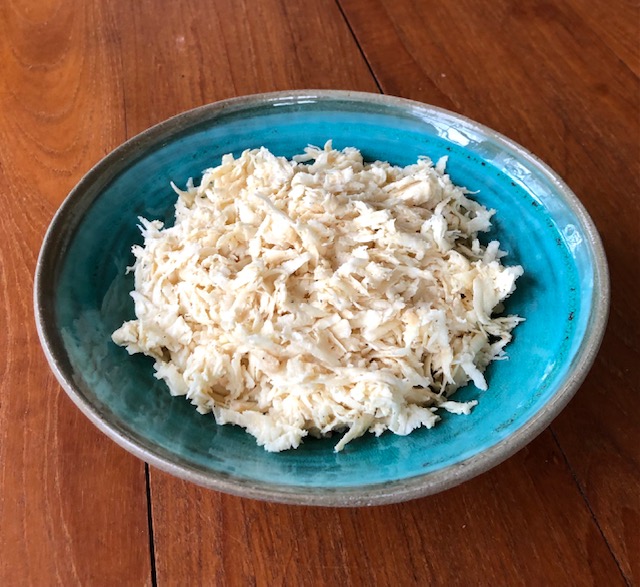
Celery Root (Celeriac), or in French, “Céleri Rave,” is the heavy, bulbous stem base of one variety of celery plants. Although botanically part of the stem rather than a true root, it is treated like a root vegetable. It has a delightful, subtle celery flavor, and is used extensively in colder parts of Europe where the “root” stores well in winter, when the more typical stalk celery was not available prior to modern transportation. Used in soups and stews, or boiled and mashed, it also makes a wonderful type of slaw, “Céleri Rémoulade,” that is somewhere between a salad and a condiment.

Céleri (Celery Root) Rémoulade


This special dish is most typical in French cuisine, showing up in appetizers and small side dishes. It is also popular in Louisiana Créole (French-descended) cooking. Fortunately it is simple to make, other than the grating by hand, which is made easier using the shredder blade in a food processor. Recently I got a celery root for another cooking purpose, and prepared a rémoulade with the generous amount I had left over.


The recipe makes enough for six or more people as a side salad and may more with appetizers. Leftovers keep well for several days in the refrigerator.


1 medium-large celery root, about 1 pound after peeling

4 tablespoons mayonnaise

1 tablespoon Dijon mustard

1 teaspoon olive oil

1 teaspoon vinegar

1 1/2 teaspoons salt, plus more to taste

1/4 teaspoon ground black pepper


Peel the celery root, cutting off the twisted smaller roots at the bottom (the peelings and small roots make excellent vegetable broth). With a sharp knife, cut out any crevices left between the bottom roots. Grate the celery root on the coarse side of a hand grater, or use the coarse grater blade of a food processor (first cutting the root into chunks small enough to fit down the feeder tube). Transfer the grated root to a mixing bowl.


Add the remaining ingredients and mix well. Let the mixture rest five or ten minutes and mix again. Do this once or twice more, as the salt draws a moisture from the grated root and the rémoulade becomes moister. Its best to make this at least a half hour before eating time. Taste the mixture and add salt, if needed, to taste.


If serving as part of a meal, place in an attractive serving dish.

,


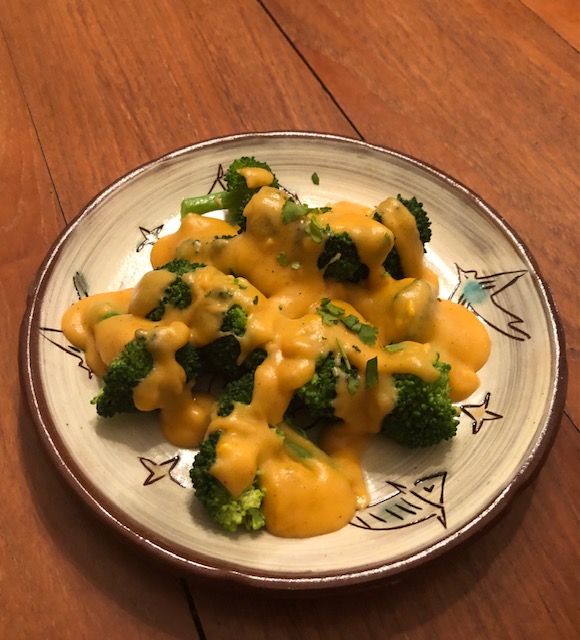
Easy Cheese Sauce for Broccoli or Cauliflower


The idea for this cheese sauce for serving over vegetables emerged out of my experiments on an easy hot cheese salsa for dipping tortilla chips, which my grandkids like at Tex-Mex restaurants.


Easy Cheese Sauce for Broccoli or Cauliflower

Here’s an easy non-Mexican cheese sauce for spooning over hot steamed or roasted vegetables. I’m also including an easy steaming method for broccoli and cauliflower to enjoy the sauce with.


Cheese Sauce:

1 cup shredded cheddar cheese

3/4 teaspoon cornstarch

1/4 teaspoon salt

1/8 teaspoon black pepper

A large pinch of cayenne

A large pinch of garlic salt

1/2 cup milk

1 tablespoon ketchup

2 teaspoons Dijon mustard

Minced parsley for garnish


In a microwaveable serving bowl, mix together the cheese, cornstarch and dry seasonings. Stir in the milk, ketchup and mustard. Mix well. 


Ten minutes before serving, stir the mixture again, then microwave it for 1 minute. Stir the mixture and microwave for another minute. Stir and microwave another minute. Continue in this manner until the cheese sauce is hot and thickened. Stir and serve the sauce to spoon over steamed or roasted vegetables. Sprinkle, if desired, with minced parsley for garnish.


Steamed Broccoli or Cauliflower:

1 pound of broccoli crowns or small head of cauliflower

1/2 teaspoon salt, or to taste


Easy Cheese Sauce for Broccoli or Cauliflower
Separate the broccoli or cauliflower flowerets off the main stems, cutting the smaller stems where necessary. For bigger pieces cut through stems lengthwise up toward the tops and then tear the two sides apart (so the tops don’t get bits cut off). Aim for one-inch pieces, which may require splitting bigger pieces again. (See the photo for an example.)  Place vegetable pieces in a steamer basket, off the heat.


Bring several inches of water to a boil in a pot that the steamer basket will sit on top of. Just before putting the steamer basket over the boiling water, sprinkle the vegetable with the salt. Place steamer basket containing the vegetable over the rapidly boiling water and cover the pot.


Steam broccoli exactly 3 minutes, or cauliflower 5 minutes. Uncover and transfer the steamed vegetable into a shallow bowl or onto diners’ plates.


Spoon cheese sauce over the vegetable and, if desired, sprinkle with minced parsley for garnish. This is more needed and effective over cauliflower, but it  also looks good over the more colorful broccoli.

Follow Us @donderoskitchen